


Following the dismantling of USAID in 2025, proposed visions for the future of foreign assistance have flooded the sector. Aid on the Hill’s new policy paper, “Strengthening American Global Leadership Through Development and Humanitarianism,” takes a different approach: arguing that before designing new aid structures, we must first define America’s role in the world.
Here is a breakdown of the key takeaways:
The Sector Is Asking the Wrong Question
Since USAID’s dissolution in 2025, former agency functions have been divided among the State Department, USDA and other entities. The administration has increasingly instrumentalized assistance as a transactional tool for reciprocal policy gains (such as critical mineral access or deportation agreements). We believe that the debate should not center on what foreign assistance should look like before grappling with the question of what role America wants to play in the world.
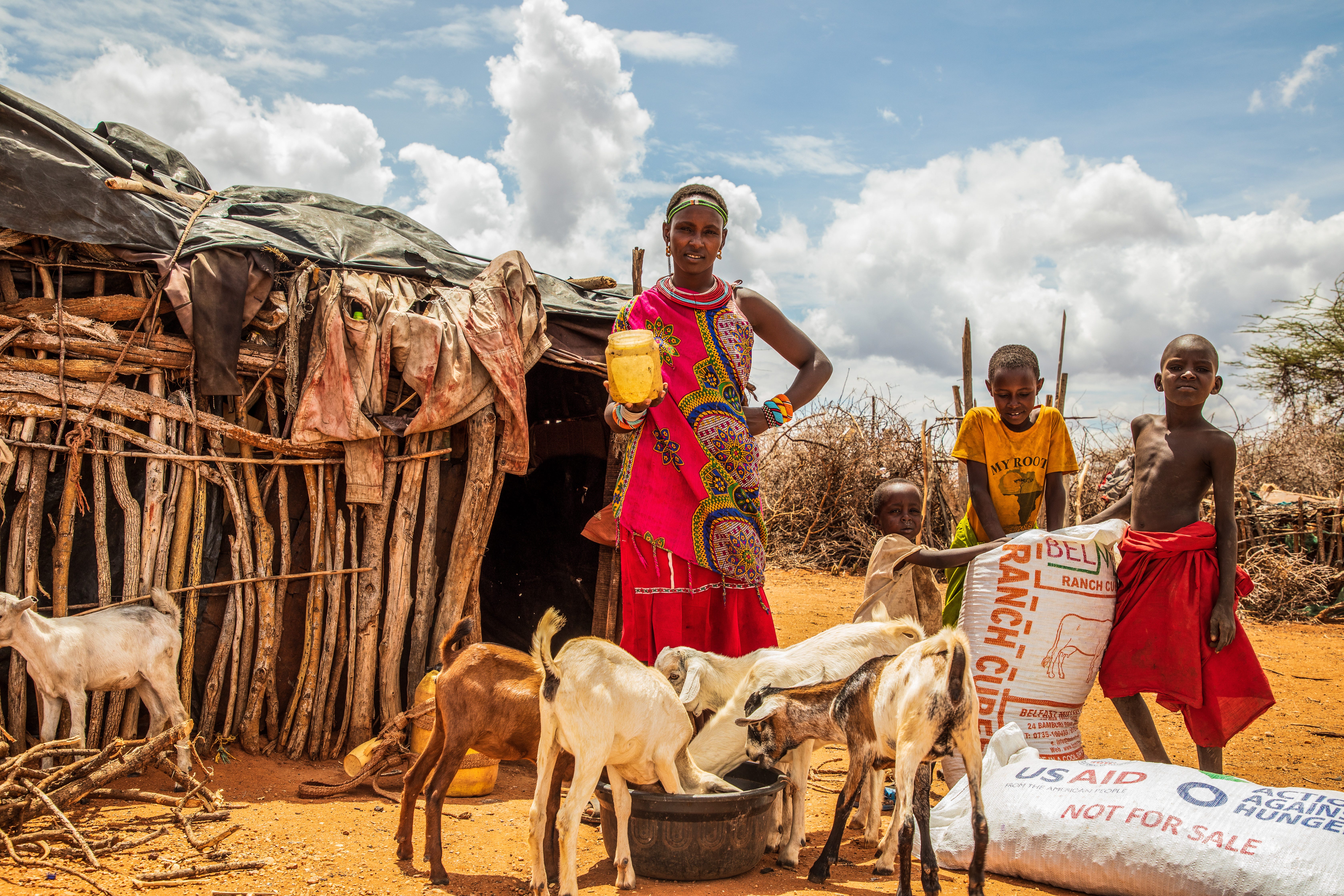
A mother in Isiolo County, Kenya and her children feeding her livestock with ranch cubes distributed by Action Against Hunger through USAID Bureau for Humanitarian Assistance funding.
Development and Humanitarianism Are Core Foreign Policy
In a changing world order, American influence cannot be taken for granted; it must be earned. To build real trust and global standing, U.S. foreign policy needs to focus on shared values rather than short-term transactions.
Development forms lasting partnerships. Instead of forcing America-first demands on partner countries, development engages them around their long-term goals. This builds deeper economic, institutional and human relationships that endure.
Humanitarian aid must remain needs-based. Relief efforts should save lives and ease suffering where needs are greatest, and should not be used as political bargaining chips or transactional leverage.
Development and humanitarian aid are vital tools for national security.
A Democratic, Evidence-Based Path Forward
We call on Congress to refuse any permanent codification of temporary agency function transfers. Instead, Congress should lead a transparent, evidence-based review that includes:
Evaluating International Models: Studying the real-world results, benefits and tradeoffs of aid mergers within foreign ministries in other donor nations.
Assessing Current U.S. Model and Performance: Rigorously evaluating how current institutional setups (U.S. Department of State, U.S. Department of Agriculture, U.S. International Development Finance Corporation, Millennium Challenge Corporation, and U.S. Trade and Development Agency) compare against past standards.
Broad Democratic Consultation: Seeking input beyond standard channels to incorporate development practitioners, partner-country governments, local experts, civil society and the American public.
Why a Standalone Agency is Likely Required
Treating foreign assistance as a quick bargaining chip undermines the specialized skills, institutional focus and professional expertise needed to deliver real, lasting results. Drawing on lessons from international aid mergers, we believe that sustained execution of this work likely requires a renewed, independent successor agency to USAID, not simply restoring the past model, but creating an improved and updated fit-for-purpose institution.
Bottom Line: Foreign assistance architecture must follow function. Congress has an opportunity to systematically evaluate post-2025 structural shifts rather than treating them as settled, keeping principled development and humanitarianism at the center of U.S. global leadership.